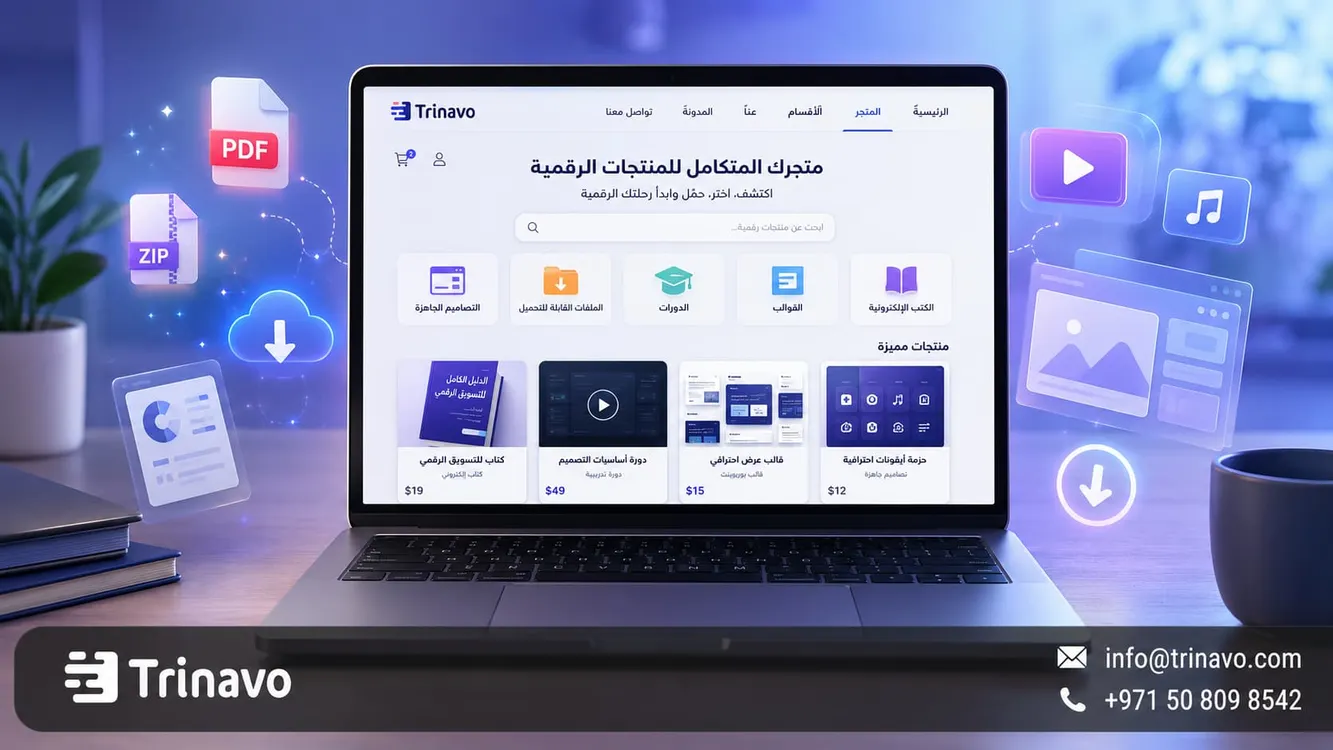
Build a professional digital products store with Trinavo that lets you easily sell digital products such as courses, e-books, templates, and digital files—and earn money around the clock, 24 hours a day.
Selling products online is no longer limited to physical goods that require inventory, shipping, and packaging. Trainers, designers, writers, content creators, and people with all kinds of expertise can now turn their knowledge and skills into digital products that can be sold over and over again, such as selling e-books or selling online courses and videos.
With the rapid growth of the ready-made digital products market, it has become increasingly important to understand the right foundations for building a successful digital product and turning it into a sustainable source of income. It's not just about offering a file to download; it depends mainly on the value the product delivers to the customer and its ability to solve a problem or meet a specific need in a clear and effective way.
This is where the importance of creating a professional digital store comes in—one that offers a smooth buying experience and instant delivery of products.
In this guide from Trinavo, you'll learn how to create a digital products store, choose the right product, prepare a professional sales page, and manage licensing and delivery
Learn more about all Trinavo features
What are digital products?
Digital products are intangible products that are created once and then sold and delivered online. The customer doesn't need to receive a physical product; instead, they get a file, a link, access permission, or digital content they can use after purchase.
These products can be educational, creative, practical, or customized according to the expertise of their owner and their customers.
|
Digital product type |
Suitable examples |
|
Educational products |
Selling training courses , video lessons, training files |
|
Books and PDF files |
Guides, booklets, summaries, business plans |
|
Selling digital templates and designs |
Canva templates, presentations, website templates |
|
Ready-to-use work files |
Excel sheets, report templates, tracking lists |
|
Products for creatives |
Images, effects, audio files, design elements |
|
Content subscriptions |
File library, monthly updates, exclusive content |
|
Custom products |
Editable templates or special licenses |
What sets these products apart is that they don't run out of stock in the traditional way. You can sell the same file more than once, update it when needed, and develop new versions of it based on customer feedback or market needs.
How do you choose a sellable digital product?
Choosing a digital product starts from the problem, not from the file. Before you decide to sell a book, template, course, or training file, ask yourself: what need will this product solve? And who is the customer that will benefit from it?
A sellable digital product usually achieves one or more of these goals:
|
What the product offers |
Example |
|
Saves time |
A ready-made template, tracking sheet, business form |
|
Teaches a skill |
A short course, practical guide, training file |
|
Organizes a task |
A plan, checklist, report template |
|
Solves a recurring problem |
An accounts file, content template, step-by-step guide |
|
Provides a ready resource |
A design package, image library, visual elements |
So don't just ask, “What file can I sell?” Instead ask, “What result will the customer reach after using it?” The clearer the answer, the easier it becomes to market and sell the product
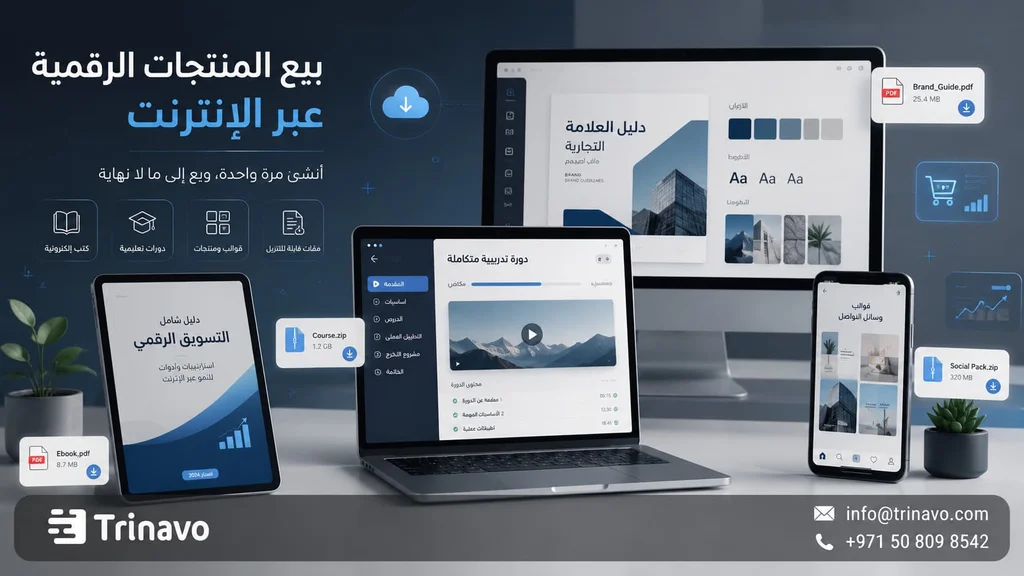
Why are digital products a great opportunity for profit?
The key advantage of digital products is that they separate the time of production from the time of sale. It may take you a while to prepare a course, book, or template, but once the product is published it can be sold multiple times without producing it again from scratch each time.
This doesn't mean that passive income from digital products comes without work. It means that most of the effort goes into building the product, creating a convincing sales page, preparing delivery, and then marketing and continuously improving it.
|
What sets digital products apart |
How does it benefit the business owner? |
|
No physical inventory needed |
Reduces storage and preparation costs |
|
Sellable more than once |
Helps build recurring income from the same product |
|
Can be delivered instantly |
The customer receives the product after purchase without waiting for shipping |
|
Easy to update |
You can add improvements or new versions over time |
|
Suitable for creatives and experts |
Turns knowledge or a skill into a sellable product |
|
Scalable |
Can be sold to a wide audience without major geographic limits |
That's why selling digital products suits trainers, designers, content creators, teachers, consultants, developers, and experts who want to turn their knowledge or files into products that can be sold online.
What's the difference between selling digital and physical products?
|
Element |
Physical products |
Digital products |
|
Inventory |
Requires quantities and availability tracking |
Doesn't run out in the traditional way |
|
Delivery |
Depends on shipping and delivery |
Done via a link, file, or access permission |
|
Costs |
Include storage, packaging, and shipping |
Mostly concentrated in production and marketing |
|
Biggest challenge |
Preparing and delivering the order to the customer |
Clarifying the value and protecting the content |
|
What the customer needs |
Knowing the specifications and the delivery |
Knowing the content, how to use it, and the license |
For this reason, a digital file store shouldn't be designed like an ordinary store. What matters here isn't only showcasing the product, but clarifying what the customer will get after purchase, how they'll access it, and what the usage limits are.
What does a digital products store need to succeed?
For a digital products store to succeed, it's not enough for the product to be good alone; the buying experience must be complete and clear.
|
Element |
Why is it important? |
|
A clear sales page |
Explains what the customer will get before buying |
|
Organized delivery |
Reduces questions after payment |
|
Clear terms of use |
Define the customer's rights and the product's usage limits |
|
Offers and bundles |
Help increase the order value |
|
Performance analytics |
Reveal which products and pages need improvement |
This way, the store becomes more than a place to upload files; it becomes a selling system that helps the customer understand and buy, and helps the product owner improve over time
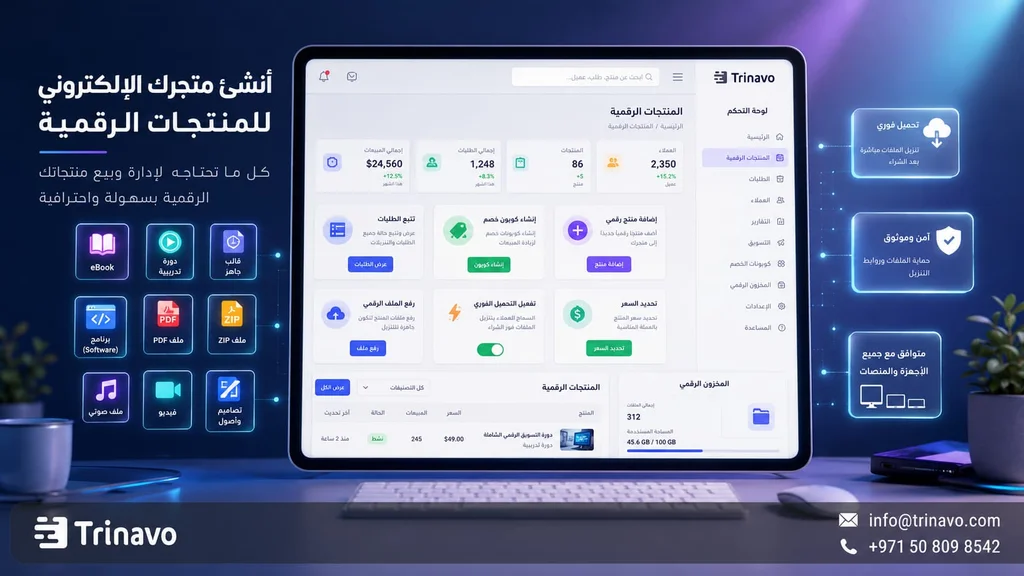
How do you create a digital products store with Trinavo?
Once you've settled on the type of digital product you want to sell, the Trinavo platform opens the doors for you to build your store in a strategic and organized way. The goal here goes beyond simply uploading PDF files or download links; it lies in creating a complete selling experience: a clear product, a convincing sales page, organized delivery, understandable terms of use, offers customers can try, and analytics that help you improve your products over time.
1 . Creating the account and setting up the store
You can start building your online store right away through the Trinavo platform. Perhaps what makes the platform stand out and the most suitable choice for beginners and professionals alike is that it offers a launch experience entirely free of risk; Trinavo lets you create your account and set up your store on a completely free plan, without asking for any credit card details.
Learn more about Trinavo's plans and pricing
2 . Adding the product and preparing the delivery files
Before uploading the product, prepare its files in a clear and organized way. If you're selling an e-book, make sure the file is well formatted. If you're selling a template, add usage instructions. And if you're selling courses and videos, clearly specify how to access the content.
The customer doesn't want to buy and then be confused about how to use it. So it's best for the digital product to include an explanatory file or brief instructions, such as:
- The product contents.
- How to open the files.
- How to use it.
- Can the file be edited?
- Does it need a specific program?
- Are there future updates?
- How to get in touch if there's a problem.
The more organized your delivery files are, the fewer questions you'll get after purchase, and the higher the chance of customer satisfaction.
3 . Creating a sales page that shows the product's value
The product page in a digital products store is the most important part of the selling process. The customer can't touch or try the product before buying, so they need a clear explanation of what they'll get.
Make sure the product page includes:
- A clear product title.
- A description explaining the problem it solves.
- A list of contents.
- Images or previews of the file if possible.
- How to use it.
- The suitable audience.
- The license type.
- The delivery method after purchase.
For example, instead of writing “An Excel template for managing expenses,” the description can be clearer:
“A ready-made template that helps you track your monthly expenses, categorize spending, and see where your money goes through organized tables and simple charts.”
4 . Setting the license and protecting the content
When selling digital products, the terms of use must be clear from the start. Does the customer have the right to use the product for themselves only? Can they use it in a commercial project? Can they resell it? Is the license for one person or for a team?
A clear license protects the product and reduces misunderstandings after purchase. Within the product page or its description, you can clarify:
- Personal use only.
- Commercial use.
- No reselling allowed.
- No sharing of the link or file.
- The number of downloads, if any.
- Does it include future updates?
- Is the license for one individual or a team?
Protection here doesn't mean preventing every possibility of sharing, which may not always be possible; it means reducing misuse, clarifying your rights, and building a more professional experience around the product. So don't keep the terms of use hidden or vague—make them a clear part of the product page before purchase.
5 . Enabling payment and instant delivery
It's important for the payment experience to be clear and fast, because the customer expects to access the product immediately after purchase. So make sure to clarify the delivery method, and whether the customer will get a download link, a file, or access permission to the content.
6 . Creating product bundles and offers
Digital products are very well suited to bundles and offers. Instead of selling a single file only, you can create a package that brings together more than one related product, such as a template bundle, a course with a practical file, an e-book with a checklist, or a set of training files.
Bundles can help you increase the order value, because they give the customer the feeling of getting a complete solution rather than a single file. You can also use limited offers or a launch discount to encourage the first purchase.
Through Trinavo, you can take advantage of coupons and discounts to test more than one offer without manually editing each product—such as a launch discount, a digital products bundle, a limited-time offer, or a special coupon for your social media followers.
Communication integrations like WhatsApp also help you turn questions and interest into actual orders, because the customer can access the product link, review the details, and then reach out to you when needed without starting the conversation from scratch.
Learn more about sending orders via WhatsApp
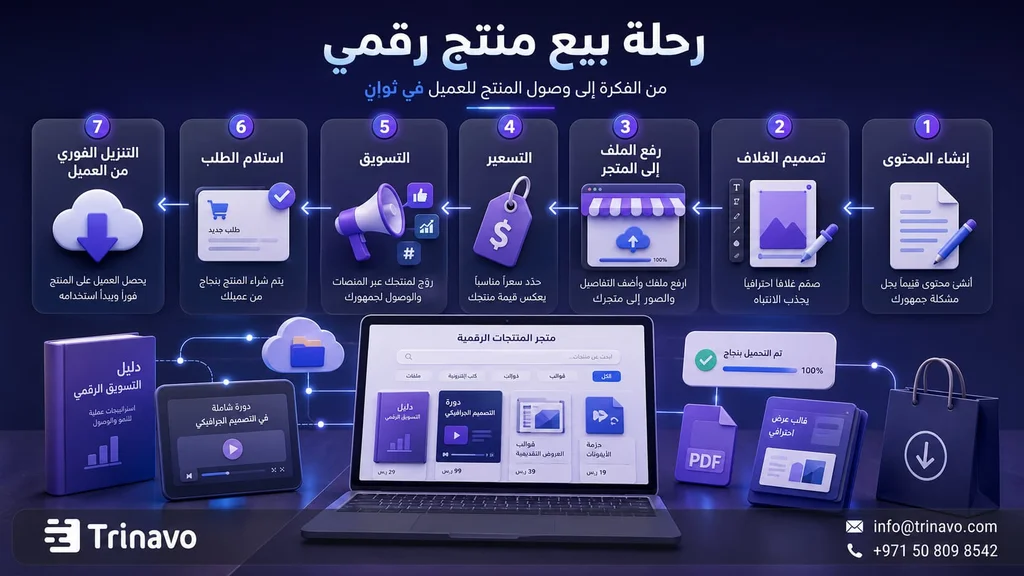
Mistakes that weaken digital product sales
|
The mistake |
How does it affect sales? |
How do you handle it? |
|
A generic product description |
The customer doesn't understand the product's value |
Explain the problem it solves and the expected result |
|
Not showing the file's contents |
Makes the customer hesitate before buying |
Add a clear list of contents or preview images |
|
Absence of terms of use |
Causes misunderstanding about sharing or reselling the product |
Clarify the license and the permitted use |
|
Unclear delivery |
Increases questions after purchase |
Explain how to access the file or content |
|
No instructions |
The customer may not know how to use the product |
Attach an instructions file or a brief explanation |
|
An unjustified price |
Makes the customer compare it with free files |
Link the price to the value and the time the product saves |
|
Not updating the product |
Reduces its value over time |
Update the files when needed and make that clear to customers |
|
Relying on a single product only |
Keeps sales limited |
Develop bundles or complementary products |
The clearer the product page, the easier the purchase decision becomes. The customer isn't just buying a file; they're buying a result, a shortcut, or knowledge they want to reach quickly.
Trinavo's features for designing a digital file store
Managing a digital products store means dealing with files, sales pages, licenses, offers, orders, and analytics. So you need a platform that helps you organize these details without complexity.
|
What a digital products store needs |
What Trinavo provides |
|
Launching a store quickly |
Creating a store without technical experience |
|
Displaying multiple digital products |
Managing products and categories |
|
Explaining each product's value |
Customizable product pages |
|
Delivering products after purchase |
Managing orders and delivery files |
|
Clarifying usage rights |
Adding license terms inside the product page |
|
Offers and bundles |
Customizable coupons and discounts |
|
Improving visibility |
SEO tools |
|
Performance tracking |
Analytics and reports |
|
Communicating with customers |
Integrations like WhatsApp |
|
Expanding later |
Support for languages, currencies, and growth options |
Whether you're selling courses, educational files, design templates, e-books, or specialized digital products, Trinavo helps you build an organized store that displays your products clearly and makes it easy for the customer to buy and access the product.
Start with a single digital product and test the market with Trinavo
You don't need to launch a large library of digital products from the start. It's better to begin with one clear product: an e-book, a template, a training file, a short course, or a simple bundle that solves a specific problem.
With Trinavo, you can start a digital products store and try your first product in front of your potential customers, then monitor the interaction, the questions, and the sales. You may discover that customers want extra explanation, an advanced version, a wider bundle, or a monthly subscription.
This way, selling digital products becomes a process of continuous development. You start with a simple product, then build new products based on what customers actually need, not on guesswork.
FAQ about selling digital products
What are the best-selling digital products online in 2026?
Among the most in-demand digital products are: courses, e-books, design templates, ready-to-use work files, website templates, educational files, digital subscriptions, and products that help the customer save time, learn a skill, or get a task done faster.
How do I protect my digital products from unauthorized use?
Start by clarifying the terms of use within the product page, and state whether the license is personal or commercial, and whether sharing or reselling is allowed. You can also reduce risks by managing access links, updating the files, and placing clear notices about usage rights.
Can I sell monthly subscriptions for digital products via Trinavo?
You can organize recurring digital products through bundles, offers, or content that is continuously updated. And if you need an advanced subscription system, a suitable experience can be built according to the tools and integrations available in the store.
How do I price my digital products for maximum profit?
Don't price the product based on file size alone, but on the value it delivers. Ask: does it save time? Does it shortcut experience? Does it help the customer achieve a result? Then compare its production cost, the level of demand for it, and the prices of similar products, with the option of offering bundles or multiple versions at different prices.
Can I sell online courses and videos through a digital products store?
Yes, you can sell online courses and videos if the product page clarifies the course content, the number of lessons, the access method, the usage duration, and the suitable audience. Most importantly, the buying and delivery experience should be clear so the customer knows how they'll access the content after payment.


