
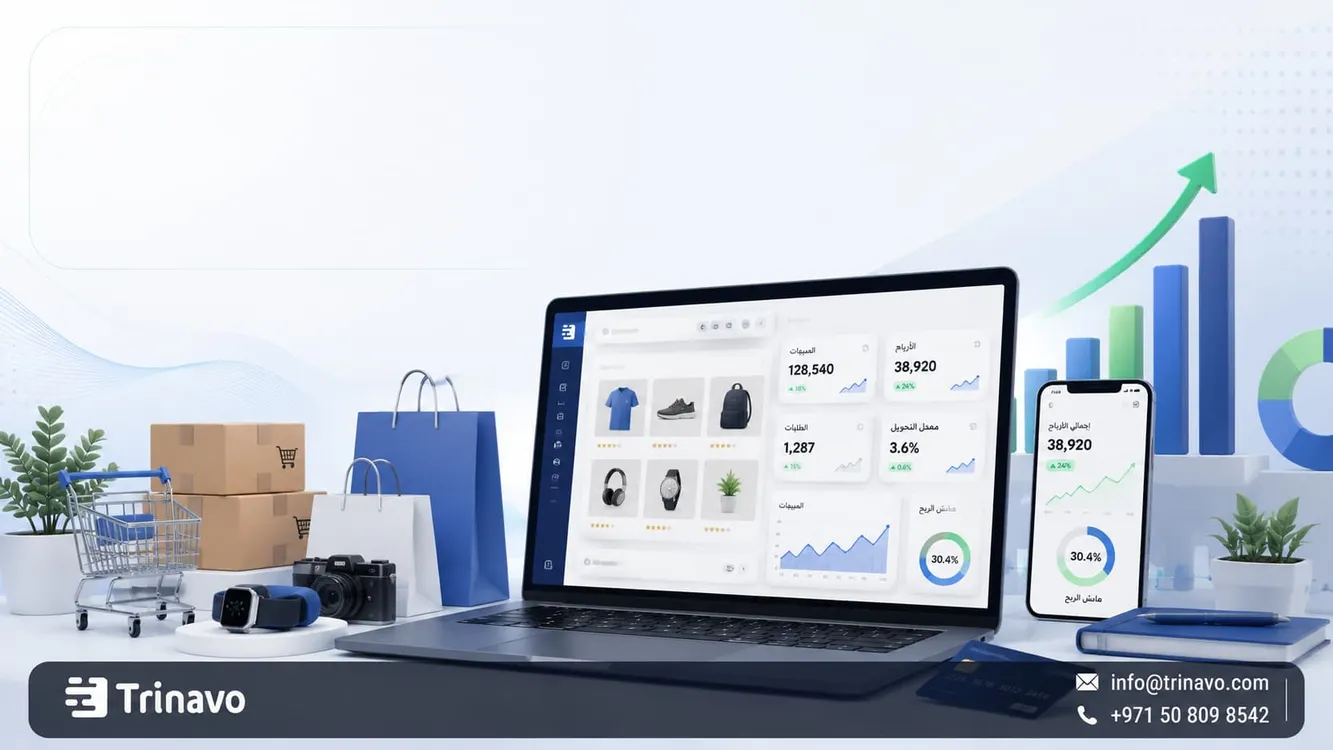
Discover how to make money from e-commerce through direct selling, dropshipping, digital products, and affiliate marketing, with practical tips and how Trinavo helps.
If you're looking for a way to make money from e-commerce, the most important thing is not to start by guessing at a quick profit figure, but by understanding where the profit actually comes from.
Profit in e-commerce starts when you understand how a product turns from a purchase or manufacturing cost into a paid order that leaves a clear margin after shipping, packaging, payment fees, marketing, and any other operating expenses.
Many beginners confuse sales with profit. A store may take plenty of orders, but once the real costs are counted, the owner discovers the margin is thin or simply not enough to keep going. So it isn't enough to sell online, you need to know how to profit from every single order.
In this guide, we'll walk through the profit models in e-commerce, such as direct selling, dropshipping, digital products, and affiliate marketing, explaining when each model makes sense, where its limits are, and how to calculate your profit margin before you begin.
And with Trinavo, you can build a free online store, add your products, test real orders, and track your first numbers before scaling up inventory or ads. That way your e-commerce business starts on clearer footing, and you avoid costly decisions during the testing phase.
What Is E-commerce and How Does It Become a Real Source of Income?
E-commerce is simply selling products or services over the internet. That selling can happen through a standalone online store, a marketplace, a social media platform, or even a simple payment link.
But profitable e-commerce is different from selling at random. Selling at random means you post a product, reply to messages, and wait for orders. Profitable e-commerce runs on a clear system instead: carefully chosen products, calculated pricing, an easy buying experience, inventory tracking, and continuous improvement based on data.
The difference between the two shows up in the numbers. Someone may sell a product for 100 without realizing that the real cost, after shipping, packaging, payment fees, and advertising, has reached 90. The sales are there, but the profit is thin.
So if you're asking: how do I make money from e-commerce, the answer starts with knowing your margin, not just counting orders.
Profitable E-commerce Is Not Just Sales
Sales mean money came into the store; profit means what's left once every cost is deducted.
Say you sell a product for 150 riyals or dirhams. The deal may look good, but the real math looks like this:
|
Item |
Example cost |
|
Selling price |
150 |
|
Product cost |
70 |
|
Packaging |
8 |
|
Shipping covered by the store |
15 |
|
Payment or processing fees |
4 |
|
Advertising cost per order |
20 |
|
Approximate profit before other expenses |
33 |
In this example, selling at 150 does not mean a profit of 80. The profit is closer to 33 before any extra expenses such as returns, discounts, or the cost of your time.
That's why you need to work out your margin before you launch a product. It isn't enough to say: “I'll sell above cost”. You need to know everything that goes into that cost.
A common pricing approach is to start from your cost and then add a profit margin, a method usually known as cost-plus pricing. There are other approaches too, such as pricing based on the competition or on the value the customer sees in the product.
How Much Can You Really Earn from E-commerce in Your First Year?
There's no fixed number. Anyone who promises you'll earn a specific amount within a month or a year is usually ignoring how the market actually works.
Profit depends on:
- The type of product.
- The profit margin.
- The number of orders.
- The cost of acquiring a customer.
- The return rate.
- Repeat purchases.
- Platform, payment, and shipping costs.
- Your ability to improve the store and the marketing.
A few simple examples make the picture clearer:
|
Scenario |
Monthly orders |
Average net profit per order |
Approximate monthly profit |
|
Slow start |
20 orders |
25 |
500 |
|
Good start |
80 orders |
30 |
2400 |
|
A store that's learning its market |
200 orders |
35 |
7000 |
|
A store that needs a review |
150 orders |
8 |
1200 |
What the table tells us is that order count alone isn't enough. A store selling 80 orders at a healthy margin can be better off than one selling 200 orders at a weak margin with high ad costs.
In the first year, the realistic goal isn't to hit a huge number right away, but to prove that there's a product people want, a margin you can live with, and marketing channels you can build on
The Best E-commerce Profit Models by Capital and Experience
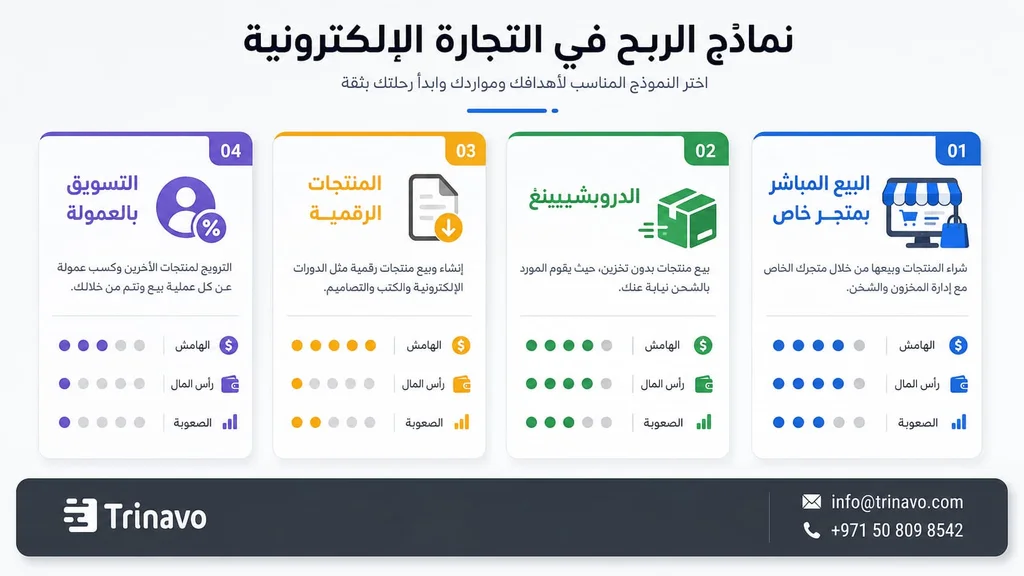
Not every way to make money from e-commerce suits everyone. Some models need capital, some need marketing experience, and some need an audience or strong content.
|
Model |
Capital |
Potential margin |
Difficulty |
Who is it for? |
|
Direct selling through your own store |
Medium |
Good to high |
Medium |
Anyone building a long-term brand |
|
Dropshipping |
Low to medium |
Usually lower |
Medium to high |
Anyone good at marketing and testing |
|
Digital products |
Low |
High once produced |
Requires experience or an audience |
Content creators and experts |
|
Affiliate marketing |
Low |
Depends on the commission |
Requires content and traffic |
Anyone who doesn't want to handle shipping and inventory |
|
Marketplaces |
Medium |
Variable |
High competition |
Anyone who wants to reach a ready-made audience |
Choose a model that fits your current situation, not just the one everyone else is talking about.
Direct Selling Through Your Own Store
Direct selling means you sell your own products through a store you own. You might buy the products wholesale, make them yourself, import them, or sell products under your own brand.
This model may be the best long-term option for anyone building a real business, because it gives you more control over:
- The customer experience.
- Pricing.
- Customer data.
- How the brand looks.
- Offers and discounts.
- Remarketing to customers.
- Optimizing product pages for search engines.
In return, this model needs clearer management: inventory, shipping, customer service, order tracking, and ongoing marketing.
The upside is that your margin can improve over time as you learn which products sell best, bring shipping costs down, and work out which marketing channels perform
Trinavo suits this model because it helps you create a store, add products, manage orders, track inventory, and connect your payment and marketing tools from one place.
Dropshipping
Dropshipping means listing products in your store without buying inventory upfront. When a customer places an order, it's passed to the supplier, who handles fulfillment and shipping, while your profit is the difference between what the customer pays and what the product costs you from the supplier.
This model can look ideal for beginners because it lowers the upfront cost of stocking inventory. But that doesn't mean profit is guaranteed or easy. The store owner doesn't always control product quality, shipping speed, packaging, or the customer's experience after the order.
That's why dropshipping calls for a reliable supplier, clearly defined products, calculated pricing, accurate descriptions, and constant attention to the customer experience. The challenge isn't only that you hold no inventory, it's whether you can manage the relationship between customer and supplier without damaging trust in your store.
This is where Trinavo can help if you go with this model, through dropshipping integrations, which let you connect your store to the supplier, import products, and pass orders through for fulfillment in a far more organized way than handling them by hand.
But the most important decisions still rest with you:
· Choosing the right product
· Calculating your profit margin after shipping costs
· Vetting the supplier's quality before you rely on them
Dropshipping can be a good way to test a market, but it's no substitute for planning, correct pricing, and good customer service.
Selling Digital Products and Courses
Selling digital products covers courses, ebooks, templates, training files, designs, subscriptions, or any content you can deliver to the customer online after purchase.
The main advantage of this model is that it needs no physical inventory, shipping, or packaging. You build the product once, then you can sell it many times over, updating it or releasing new versions based on customer feedback.
But that doesn't make selling digital products easy or automatic. The real challenge is explaining the product's value clearly:
· What problem does it solve?
· What does the customer get after buying?
· How will they reach the file or the course?
· And what are the terms for using the content?
This is where Trinavo can help you organize the selling experience, by creating a clear product page, adding the product description and content, managing orders, using coupons and discounts, and tracking performance through analytics. It can also be used to sell digital products such as courses, ebooks, templates, and ready-made files.
And if the digital product is a prepaid card, a game code, or a license, Trinavo offers an integration with Gate4Cards that lets you sell digital products and deliver them automatically after purchase.
So digital products may be one of the most scalable profit models, but they need a genuinely useful product, a convincing sales page, and clear delivery, so the customer feels they bought real value rather than a file they'll forget after downloading.
Affiliate Marketing
Affiliate marketing means promoting other people's products or services and earning a commission when a purchase, a signup, or some specific action happens.
The advantage is that you don't manage inventory, shipping, or customer service. But you do need an audience or a source of traffic:
· A blog
· A YouTube channel
· Social accounts
· Ads
· An email list
This model suits anyone good at content or marketing, but it isn't right for someone who wants to build a store and products of their own.
The core problem is that you usually don't own the customer; you send them to someone else, and you don't fully control the buying experience or the long-term relationship
Steps to Build a Profitable E-commerce Business
Once you've chosen a profit model, the build phase begins. Here it isn't enough to pick a product and open a store, you need to build your numbers from day one.
A profitable business starts from three things:
- A product people want.
- A clear profit margin.
- A customer acquisition cost you can control.
If even one of those is off, the business becomes exhausting even when sales look good.
Choosing a Profitable Product
A profitable product isn't necessarily the most expensive one. A profitable product is one with clear demand, a cost you can control, and a margin that leaves room for marketing, shipping, and discounts without losing money.
Before you choose a product, ask:
- Is there clear demand for it?
- Can I explain it with one image and a short description?
- Is it easy to ship?
- Are returns on it low?
- Can it be sold again to the same customer?
- Does it have enough margin for advertising?
- Is the competition around it based on price alone?
For example, a product priced at 300 may not be profitable if shipping and return costs are high. And a product priced at 80 can be profitable if it ships easily, is in demand, and earns repeat purchases.
Building the Right Profit Margin
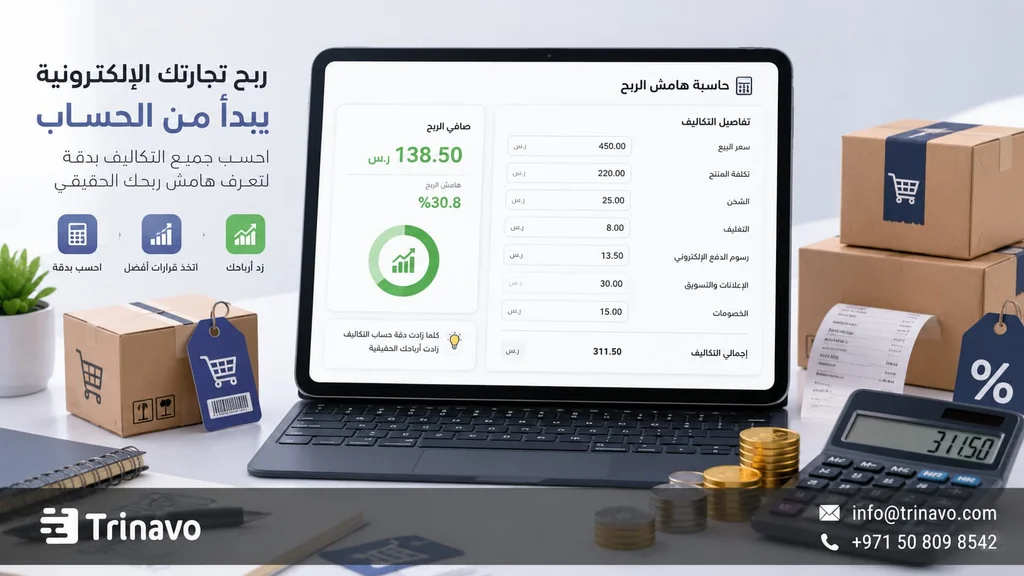
Before launching any product, calculate your profit margin like this:
Profit margin = selling price - every cost tied to the order
And those costs include:
- Product cost.
- Packaging.
- Shipping, or the share of it you cover.
- Payment fees.
- Advertising cost per order.
- Discounts.
- Expected returns.
- The cost of the platform or the tools.
- Any commissions or extra fees.
A practical example:
|
Item |
Value |
|
Selling price |
200 |
|
Product cost |
85 |
|
Packaging |
10 |
|
Payment fees |
5 |
|
Shipping subsidy |
20 |
|
Advertising cost per order |
30 |
|
Approximate profit |
50 |
In this example, the approximate profit is 50 out of 200, which is 25% before any extra expenses. That's a margin you can work with, but it needs constant monitoring.
If the profit were only 10, a single return or one underperforming ad could wipe it out entirely
Customer Acquisition Cost
One of the most important numbers in e-commerce is customer acquisition cost, meaning how much you spend on marketing to win a single order.
If you spend 300 on ads and get 10 orders, the acquisition cost per order is 30.
If your profit per order is 50, there's still a margin.
But if your profit per order is 20, you're losing money despite the sales.
That's why knowing your visitor count isn't enough; you need to understand what happens after the visit. Where did the customer come from? Which product did they view? Did they add it to the cart? And where did they stop before completing the order?
This is where Trinavo helps, with tools that give you a clearer view of campaign performance, traffic sources, and customer behavior inside the store, so you can improve your marketing based on real data rather than guesswork.
Trinavo's Role in Making Money from E-commerce
Trinavo alone doesn't guarantee profit; any store's success depends on the product, pricing, shipping, marketing, and customer service. But the right platform helps you manage all of those clearly, and that matters when you're looking for a way to make money from e-commerce in practical terms.
Instead of spreading products, orders, and analytics across different tools, Trinavo lets you run the store from a single environment: products, orders, inventory, and marketing tools. That helps you understand how your store is performing and make better decisions when pricing or scaling.
Lowering the Cost of Getting Started
When starting a profitable e-commerce business for beginners in 2026, it's not wise to spend a large budget before testing the product and the market. Better to start at a low cost, add your products, and watch whether there's genuine demand for them.
With Trinavo, you can create a store on a free plan, add your products, organize categories, and try taking orders before scaling up inventory or ads. You may later need a custom domain or extra features, but the lowest-cost start gives you a chance to test the business before committing to bigger expenses.
Tracking Performance and Marketing
Anyone asking: how do I make money from e-commerce, shouldn't watch sales alone, but also traffic sources and customer behavior inside the store. Which product draws the most interest? Which campaign brings real orders? And where does the customer stop before buying?
Trinavo provides tools and reports for tracking sales, revenue, and top-performing products, alongside integrations such as Google Analytics, Google Search Console, and Meta Pixel. This data helps you improve product pages, measure campaigns, and raise your chances of making money selling online based on real numbers rather than guesswork.
Inventory and Order Management
Some of the most common mistakes that eat into profit are selling a product that's out of stock, delaying order fulfillment, or losing customer details somewhere between messages and spreadsheets. These problems look small, but they push up operating costs and weaken customer trust.
Trinavo helps you track products, available quantities, orders, and inventory updates from one place, which makes running the store easier, especially as orders grow, and protects your margin from small operational losses that add up over time.
So Trinavo's role isn't to make the profit for you, it's to help you run the store clearly, track your numbers, and improve your decisions across the different e-commerce profit models.
Build Your Store and Start the Real Path to Profit with Trinavo
Making money from e-commerce doesn't start with a quick promise. It starts with understanding the numbers: product cost, shipping, packaging, advertising, payment fees, and profit margin.
Choose the right profit model, start with clear products, watch the numbers, and improve the store based on data. And with Trinavo, you can create a free store, test your products, track orders, and use marketing and analytics tools as your business grows.
Start now by creating a free online store with Trinavo, and take your first step toward more profitable e-commerce.
Frequently Asked Questions About Making Money from E-commerce
What's the fastest way for beginners to make money from e-commerce?
The fastest is usually selling a clear product to an audience you already know, through a simple store and a direct link, marketing it through your own accounts or existing following. But speed doesn't mean sustainable profit. Lasting profit needs a clear margin, a product people want, and a good buying experience.
Is e-commerce actually profitable, or has the competition become too fierce?
Yes, e-commerce can be profitable, but competition is tougher than it used to be. So opening a store and uploading products isn't enough. You need a clear offer, calculated pricing, a good product page, and customer service that encourages repeat purchases.
How much capital do I need to start a profitable e-commerce business?
It depends on the business model. Dropshipping and affiliate marketing may need less capital, but they demand strong marketing. Direct selling requires inventory, packaging, and shipping, but it gives you more control. You can start on a small budget if you begin with a limited number of products and use a platform with a low starting cost, such as Trinavo.
Which e-commerce products are the most profitable in the Arab market in 2026?
There's no single product that suits everyone. The best products combine clear demand, easy shipping, a healthy margin, and a customer you can reach at a reasonable cost. Common examples include beauty and personal care products, accessories, gifts, home products, and specialized digital products. But testing matters more than guessing.
Should I start with my own store or with dropshipping?
Start from where you are. If you have a product or a trusted supplier and you want to build a brand, your own store is better in the long run. If you want to test ideas on a smaller budget and hold no inventory, dropshipping may suit you, but don't overlook the challenges of quality, shipping, and margin.


