
A smart start in e-commerce in Egypt begins with a simple sales page that tests real demand before expanding into a full store. This guide shows how Trinavo helps you start in an organized way and then grow gradually through managing products, orders, shipping, and measurement, so you move from random selling attempts to clear, scalable operations without rebuilding or technical complexity.
What exhausts merchants most in their early days isn't a shortage of tools, but having too many of them. They launch their store as if it were a massive project from the very first moment: lots of products, multiple sections, endless details… only to discover they haven't yet tested the simplest question: will the offer they're presenting actually be ordered?
The right launch in Egypt is usually gradual: you start with one clear offer on an organized sales page that doesn't distract the customer, then move to a full store when the operational need arises: more products, inventory, orders, shipping, and measurement. This is where the value of the Trinavo e-commerce platform comes in: a platform that helps you start simply and then expand gradually without changing your system or rebuilding from scratch.
Trinavo Egypt: What Does It Actually Offer Merchants?
Trinavo is a platform for building and managing an online store from a single dashboard, with the goal of turning selling from scattered attempts into organized operations. In practice, you need four pillars:
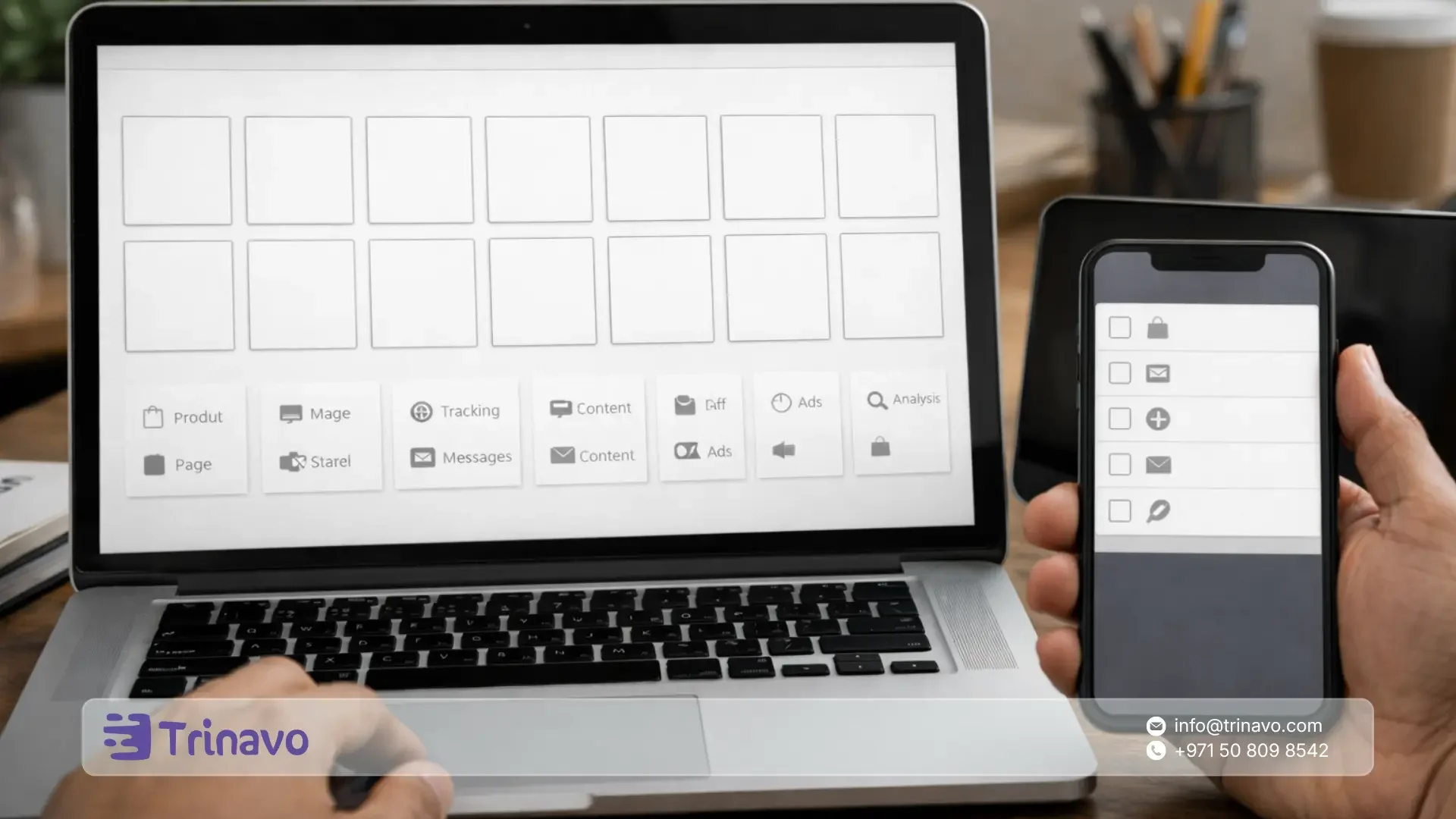
- Products: Create products with specifications, images, and prices, with the ability to manage variants when needed (such as colors or sizes).
- Orders and customers: Receive orders within a single dashboard, and know the status of each order and what it needs.
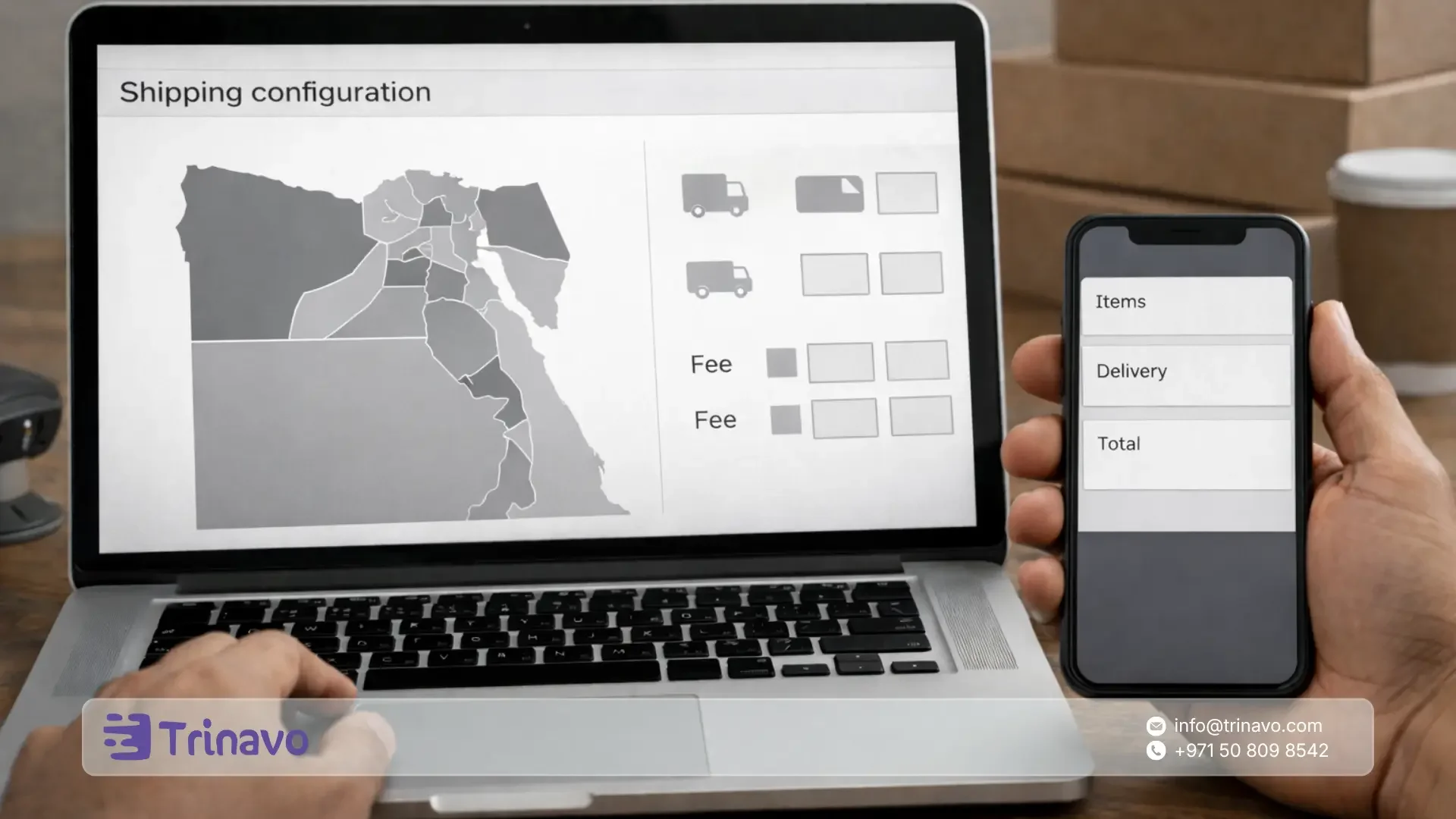
- Shipping and delivery: Set up shipping methods, zones, and rules for handling orders.
- Measurement and optimization: Know what actually sells, where customers drop off, and what needs improvement.
The point isn't how the store looks, but the ability to operate it; because the first crisis you face after your first orders isn't design, it's: Who ordered? What did they order? How do we prepare it? How do we ship it? And how do we know what's working?
An E-commerce Platform in Egypt: How Do You Choose the Right One?
When searching for an e-commerce platform in Egypt, you'll find plenty of promises, but what protects you from regret months later is choosing based on operational criteria, not marketing headlines.
A Checklist for Choosing a Store Platform in Egypt
Ask yourself these questions before making the decision:
- Can I start simply and then expand? Or does the platform push me to build a full store from the start?
- Is the dashboard clear for the merchant? Or does it assume technical expertise?
- Is order management easy? And can you track statuses clearly?
- Is shipping setup customizable? Especially given the differences between governorates and delivery costs.
- Is there a path for measurement and optimization? So I know what sells and what doesn't.
- Is expanding later possible without rebuilding? Such as adding categories, products, variants, and improving pages.
The golden rule: A platform that looks very easy but doesn't help you organize and measure can become very costly when the number of orders grows.
Creating a Free Online Store in Egypt: What Does "Free" Mean at Trinavo?
When a merchant searches for a free store in Egypt, they don't just want to create a store, they want to start without risk and then decide later. The word "free" can be used in different ways in the market, so what matters is understanding the practical limits of "free":
- Free at the start is useful for testing the offer and the market, gathering your first orders, and building an organized operational foundation.
- Upgrading makes sense when additional needs arise due to growth: increased operational volume, advanced requirements, or extra tools.
Table: When Is the Free Start Enough? And When Do You Need to Expand?
The situation | Is the free start enough? | Why?
You want to test a single offer or product | ✅ Yes | Because you need an organized sales page and initial orders to measure demand
You have a few products and want to organize them | ✅ Usually | As long as operations are simple and there are no advanced needs
You've started receiving daily orders and need tighter processes | ⚠️ You may need to expand | Because organization, reports, and operational requirements grow with you
You want steady growth built on measurement and optimization | ✅ It starts with you gradually | What matters is making measurement part of the system from the start
The goal of "free" here isn't to stay small, but to start with confidence and then make a conscious decision to expand once results prove themselves.
The Practical Path: From a Sales Page to a Full Store
Stage One: Creating an Organized Sales Page (Not Just a Pretty Page)
A sales page isn't a miniature version of a store; it's a testing tool. Its job is to reduce the customer's options and increase the clarity of their decision.
What Makes a Sales Page Organized?
- One clear offer: What are you selling? And why does it matter?
- A clear price: without twists or ambiguity.
- A brief explanation of the benefits: 3 points are usually enough.
- Clear images: they explain the product better than text.
- Short FAQs: shipping, returns, payment method.
- A clear order button: don't make the customer search for "what do I do now?".
A Sample Sales Page Structure (Text Wireframe)
- Headline: the product + the core benefit
- Trust line: warranty / returns / a simple clarification
- 3 quick benefits
- Images
- The price + a summary of what the order includes
- Short FAQs
- An "Order Now" button
Expected result: you start with the least complexity, but with a clarity that produces measurable orders.
Stage Two: Turning the Page into a Full Store (Products + Categories + Variants + Inventory)
When demand starts to appear, you'll gradually need a full store because you'll face the reality of operations: additional products, variations, inventory, and catalog organization.
What Changes at This Stage?
- Adding multiple products instead of relying on a single offer.
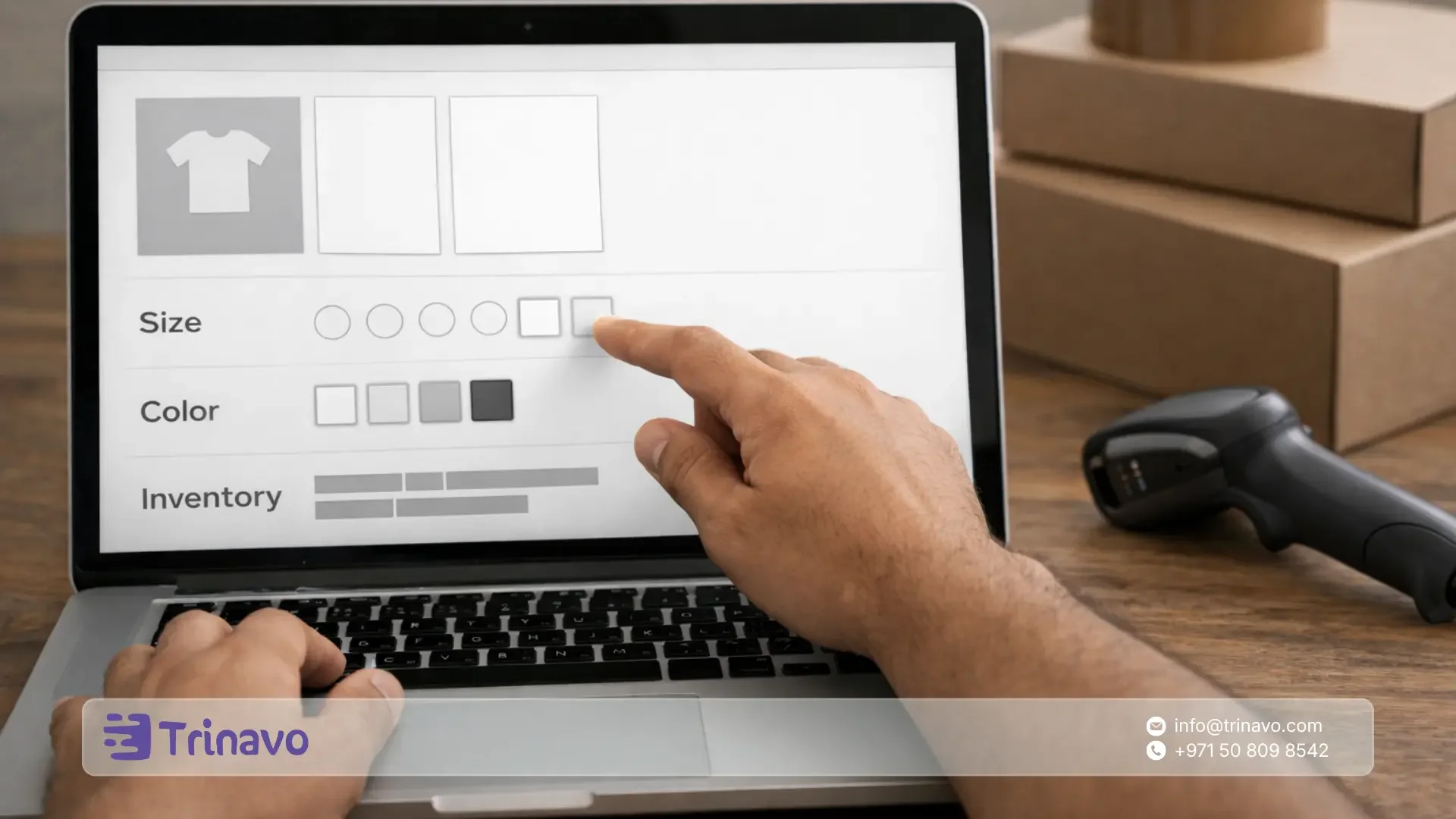
- Using variants when needed: such as color / size / dimensions to reduce order errors.
- Organizing categories so the store doesn't turn into a long, disordered list.
- Managing inventory to avoid cancellations caused by stock running out or confusion about availability.
An important operational rule at this stage: don't add many products at once. Add gradually based on what proves to sell, or based on what complements the core product (complementary products / bundles).
Stage Three: Managing Orders and Shipping Professionally (Real Operations)
When you expand, success becomes tied to your ability to execute and not just to sell. That's why you need a clear system for managing orders and shipping that reduces cancellations and returns.
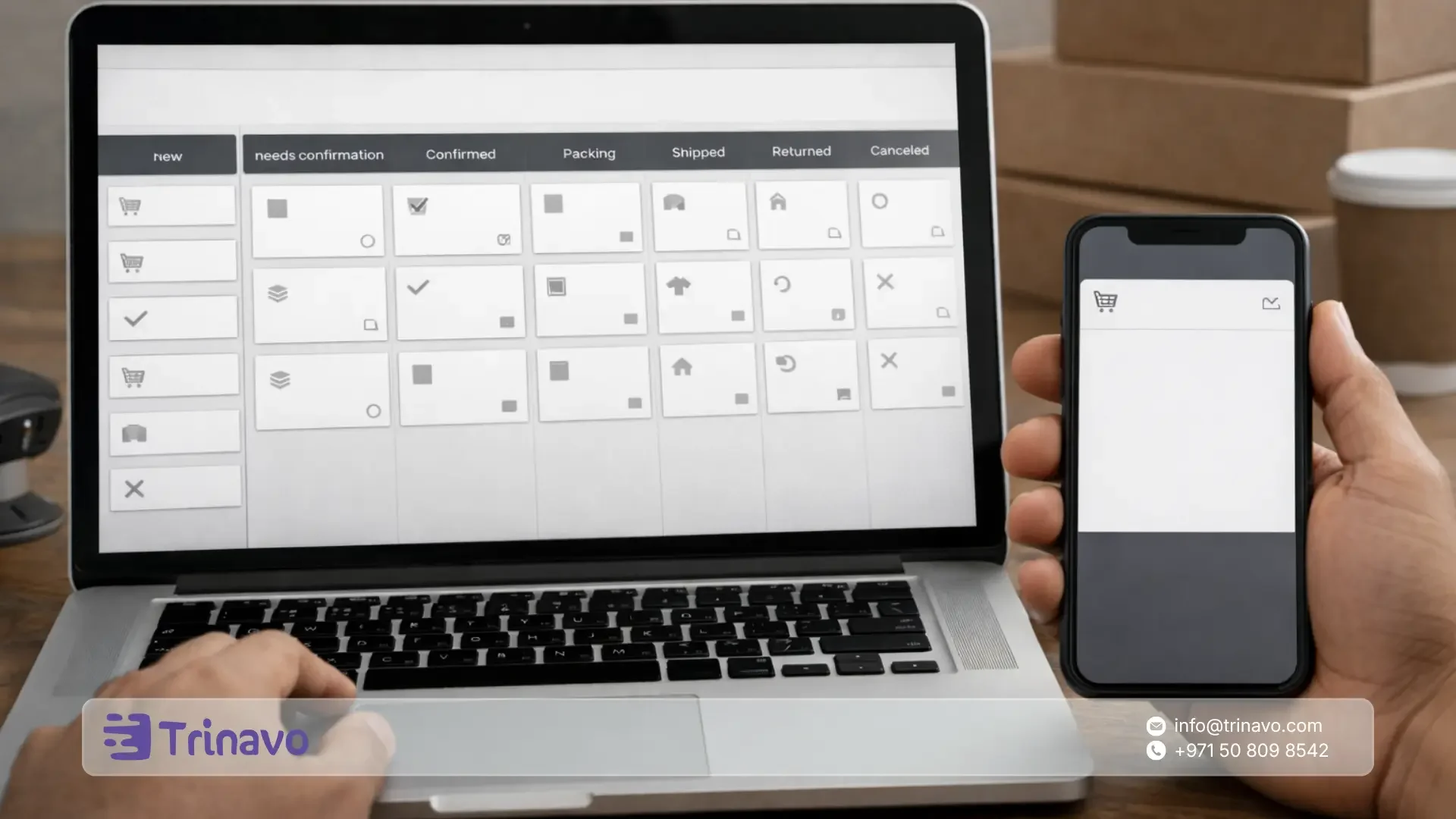
A Practical Order Status Cycle (That Prevents Chaos)
You can adopt a simple cycle such as:
- New
- Needs confirmation
- Confirmed
- Being prepared
- Shipped
- Delivered
- Returned / cancelled
Table: Order Status → Who's Responsible → What's the Action?
Order status | Who's responsible? | Required action
New | Customer service / sales | Review the data and decide whether it needs confirmation
Needs confirmation | Customer service | Confirm the data and remove ambiguity before preparation
Confirmed | Operations / warehouse | Start preparation and packaging
Being prepared | Operations | Full preparation and getting ready to ship
Shipped | Operations | Follow up on delivery and updates
Delivered | Management | Finalize closure and review delivery quality
Returned / cancelled | Management | Record the reason to improve the product / page / shipping
Why Does This Matter?
Because many losses don't come from weak marketing, but from:
- Unclear confirmation before shipping
- Errors in variants and specifications
- Delayed preparation or unclear shipping
- The absence of a system to record the reasons for cancellations and returns
Measurement and Growth: How Do You Know Your Online Store Is Succeeding?
The difference between a store that sells once and a store that grows is measurement. Growth doesn't come from enthusiasm, but from simple metrics you review weekly.
Key Metrics (KPIs) That Help You From the Start
- Weekly number of orders
- Average order value
- Best-performing products
- The most visited and highest-converting pages
- Cancellation and return rates and their reasons
- The governorates that achieve better delivery than others
How Do You Use Measurement to Improve?
- If visits are high but orders are few: review the product page (images / price / trust / FAQs).
- If add-to-cart actions are happening but checkout completion is weak: review shipping and the clarity of the total.
- If orders come in and then get cancelled: review your confirmation-before-shipping policy and data quality.
Measurement isn't a luxury; it's the brakes that stop you from spending in the wrong direction.
When Should You Move From a Sales Page to a Full Online Store?
There's no fixed time, but there are clear signs that help you make the decision without hesitation.
Decision Table: Is It Time to Expand?
The question | If the answer is yes | What does that mean?
Have orders increased to the point that follow-up has become exhausting? | ✅ | You need clearer order and status management
Have you started adding complementary products or alternatives? | ✅ | You need a catalog and categories
Do you have variations (size / color / dimensions) that cause errors? | ✅ | You need organized variants
Is stock running out causing cancellations or confusion? | ✅ | You need inventory management
Have you started marketing campaigns and need to know what's working? | ✅ | You need regular measurement and optimization
If two or three of these signs are met, then expanding to a full store becomes a logical decision, not a random leap.
Start Small… Then Expand Your Store With Confidence
If you're looking for a practical start in Egypt without complexity, begin with an organized sales page to test the market, then gradually turn it into a full store once results prove themselves. This way you don't waste time on a massive build before confirming demand, and you don't have to switch platforms when the real operational phase begins.
Frequently Asked Questions About Online Stores on Trinavo in Egypt
1- Is Trinavo suitable for beginners?
Yes, because it lets you launch with a simple, organized sales page and then expand gradually into a full store without changing the system or rebuilding the store from scratch.
2- Is the free store really enough?
It's usually enough for testing the market, organizing your first orders, and building an operational foundation. As orders grow and you need extra features, you can move to expansion as needed.
3- What's the difference between a sales page and a full store?
A sales page focuses on a single offer to reduce distraction and increase conversion, while a full store manages multiple products, categories, variants, inventory, orders, shipping, measurement, and optimization.
4- Do I need technical expertise?
You don't have to be a technical expert. What matters most is following an organized path: a clear offer, an organized page, then running orders, shipping, and measurement. The platform is a tool that makes this easier, but your success depends on the clarity of your offer and operational discipline.


