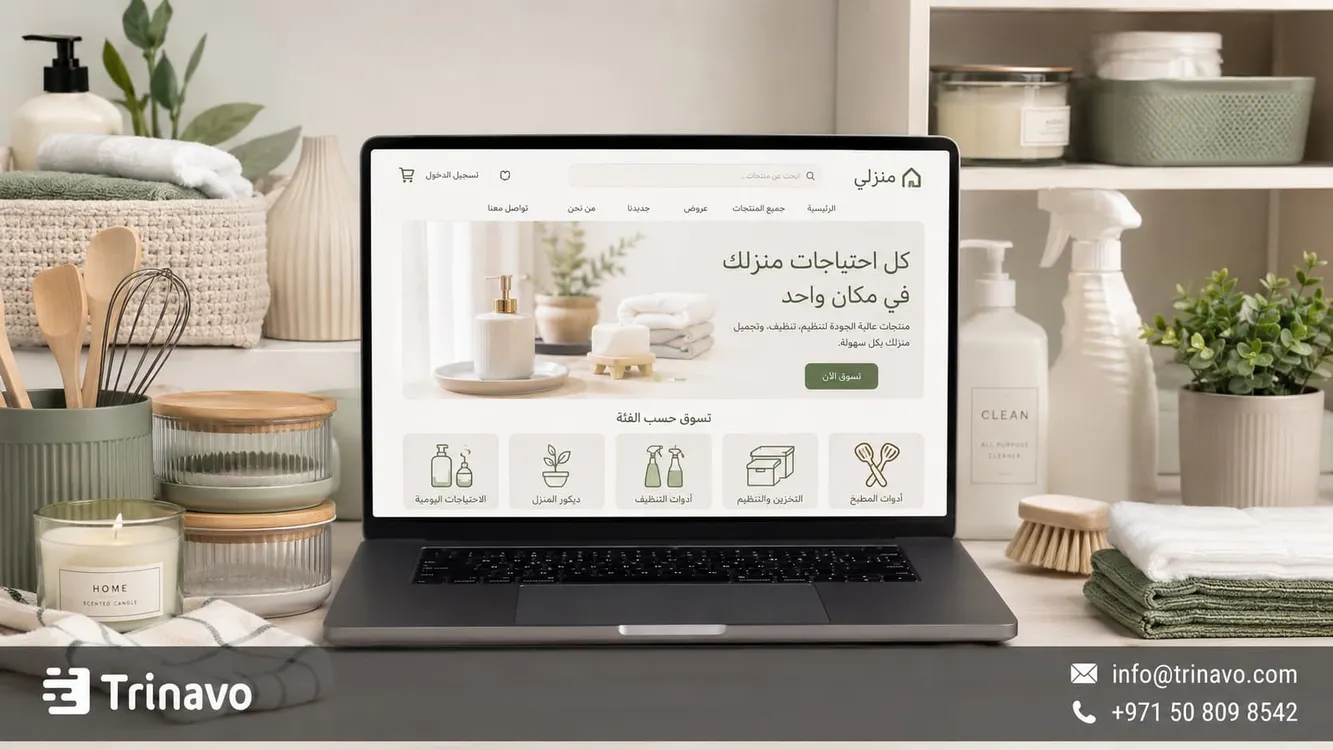
Build an online home goods store with Trinavo. Professional design, smart inventory management, and a smooth shopping experience for your customers in 2026
Building an online home goods store is not about displaying a long catalog of images, but about building an experience that helps the customer picture the product inside their home before buying it. The image, the dimensions, the material, the color, how it is used, and the shipping options are all elements that influence the purchase decision, especially when it comes to products like furniture, decor, soft furnishings, lighting, and organization tools.
In this guide from Trinavo, you will learn how to build an organized and clear home goods store that helps you present products convincingly, arrange the catalog by product type, room, or use, clarify shipping and assembly details, and then develop the store based on what customers actually prefer.
What Is an Online Home Goods Store?
An online home goods store is a digital store that lets you display and sell household products over the internet, such as furniture, decor, kitchen tools, soft furnishings, lighting, storage units, rugs, curtains, and everyday cleaning and organization tools.
But this type of store does not rely on displaying the product on its own only, because the customer does not just want to know the product name and price, they want to know whether it suits their room, whether its size is right, whether it can be cleaned easily, and whether it needs special assembly or shipping.
Also read Creating a Free Online Store with No Capital
|
Product Type |
What the Customer Needs Before Buying |
|
Furniture |
Dimensions, material, color, assembly method |
|
Decor |
Photos in a home context, color, size, how to style it |
|
Kitchen Tools |
Use, material, size, ease of cleaning |
|
Soft Furnishings |
Size, material, color, how to care for it |
|
Storage Units |
Capacity, dimensions, assembly method, weight capacity |
|
Lighting |
Size, type of use, mounting location, light color |
Why Are Customers Turning to Buying Home Goods Online?
Customers have started looking for a wider range of home options than what is available in traditional stores. Buying online gives them the chance to compare designs, colors, sizes, prices, and customer reviews before making a decision.
Home products also often require thought and comparison. A customer may see a table or a rug and need to check the space in their home, compare the color with their furniture, or share the link with a family member before buying. That is why having an organized online store makes this process easier than relying on scattered photos on social media.
From the store owner's side, selling home goods online helps display a larger number of products, organize categories, receive orders, track inventory, and showcase seasonal offers more effectively, especially if you have a large catalog of home products or furnishings
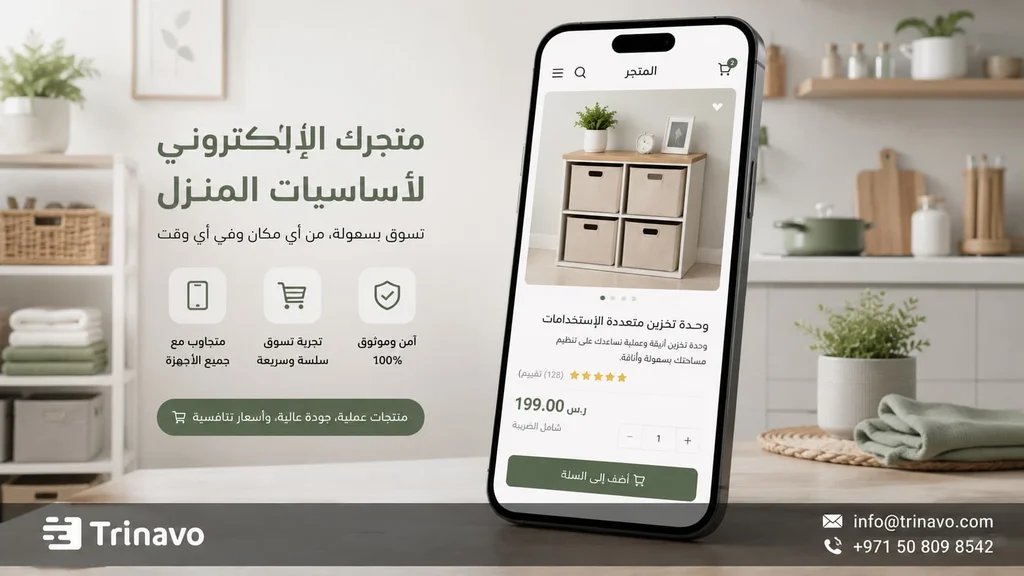
Foundations for Designing an Online Home Decor Store That Delivers an Effective Buying Experience
The design of an online home decor store is not limited to choosing an attractive look or an elegant template; it relies on creating a user experience that helps the visitor discover products and make a purchase decision easily. Some customers enter the store knowing exactly what they want to buy, while others are looking for ideas and inspiration to style a room or refresh a space inside the home.
High-Quality Photos Within a Home Context
The image in a home goods store is the most important selling element. The customer wants to see the product as it will look in real life, not just against a white background.
Therefore, it is best to use:
- A clear front-facing photo of the product.
- A photo from a side angle.
- A close-up photo of the material or details.
- A photo that shows the size.
- A photo inside a real home space.
- A photo showing how it is used or assembled, if applicable.
And if the product needs more visual explanation, such as furniture, storage units, or lighting, you can use multiple photos or a visual presentation that shows the dimensions, materials, and assembly method.
Size and Material Information That Leaves No Room for Guesswork
When selling furniture online, the size cannot be treated as a minor detail; a small difference in length or width may make the product unsuitable for the space. That is why the dimensions must appear clearly on the product page.
Be sure to clarify:
- Length.
- Width.
- Height.
- Weight, if it matters for shipping or assembly.
- The material.
- The color.
- How to care for or clean it.
- Does the product need assembly?
- Does it come assembled or disassembled?
These details reduce hesitation and help the customer choose the right product the first time.
Categories and Filters That Enable Quick Access
A home goods store may contain a large number of products. That is why the customer needs clear categories and filters that help them reach what suits them quickly.
Categories can be organized by:
- Product type: furniture, decor, kitchen, soft furnishings, lighting.
- Room: living room, bedroom, kitchen, bathroom, home office.
- Use: storage, organization, decoration, lighting, seating.
- Material: wood, metal, fabric, glass, plastic.
- Price: budget, mid-range, premium.
- Color or style: modern, classic, simple, practical.
The more organized the product catalog is, the easier a home goods store becomes to browse, especially for the customer searching for a specific piece among many options.
How to Create a Home Goods Store with Trinavo
After learning the marketing and design foundations that make a furniture and decor store successful, the actual implementation comes next. The Trinavo platform gives you a complete, easy environment to launch your online store in a few simple steps, with a fully free plan and no need to enter a credit card.
1. Create the Account and Choose the Right Theme
The platform lets you sign up quickly in just one minute, with flexible steps that lift the technical complexity off your shoulders. Once you are in, you can choose a template defined by simplicity and visual clarity, because home products always need comfortable white space that highlights the beauty of the furniture and decor without distracting the visitor's eye.
Learn more about Trinavo's plans and pricing
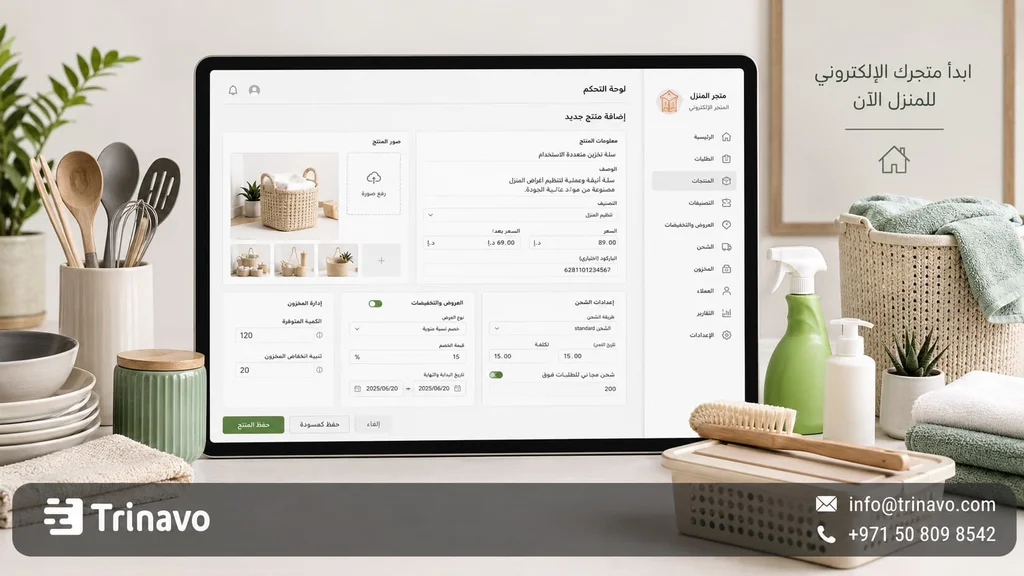
2. Organize the Catalog and Arrange the Categories
Based on the size of your product range, the Trinavo dashboard lets you organize your offerings in smart ways that serve the customer's goals. For example, you can split your store by product type and by room, so this variety helps the customer discover additional pieces they had not planned to buy, while setting up smart filtering options so they can sort pieces by color, dimensions, or material type to reach what they want quickly.
3. Prepare Product Pages with Information and Photos
The product page in Trinavo is your silent salesperson, so it is best to take advantage of its flexibility to remove the customer's confusion by uploading multiple photos of the product from different angles, close-ups of the material that show the piece's dimensions within real room contexts, using description tables to clarify length, width, and height precisely, and specifying whether the product reaches the customer ready or disassembled and needing assembly.
4. Set Up Payment, Shipping, and Delivery Options
Because shipping and delivering home goods differs from small products due to their weights and large sizes, Trinavo lets you set shipping prices in advance based on weight or region to avoid surprising the customer with unexpected costs at the final step, while clearly indicating whether home assembly service is included in the price or available as an add-on, and enabling a variety of electronic payment options alongside cash on delivery to build greater trust with shoppers.
Learn more about order and delivery management
5. Track Analytics and Grow Sales Over Time
After launching the store, take advantage of Trinavo's smart analytics and reports dashboard to monitor your customers' actual behavior, where you can find out which pieces are most visited and least sold to decide whether they need a price adjustment, an explanatory video on how to assemble them, or even bundling them into packages and marketing offers that give the customer a complete solution for their home and increase your sales volume.
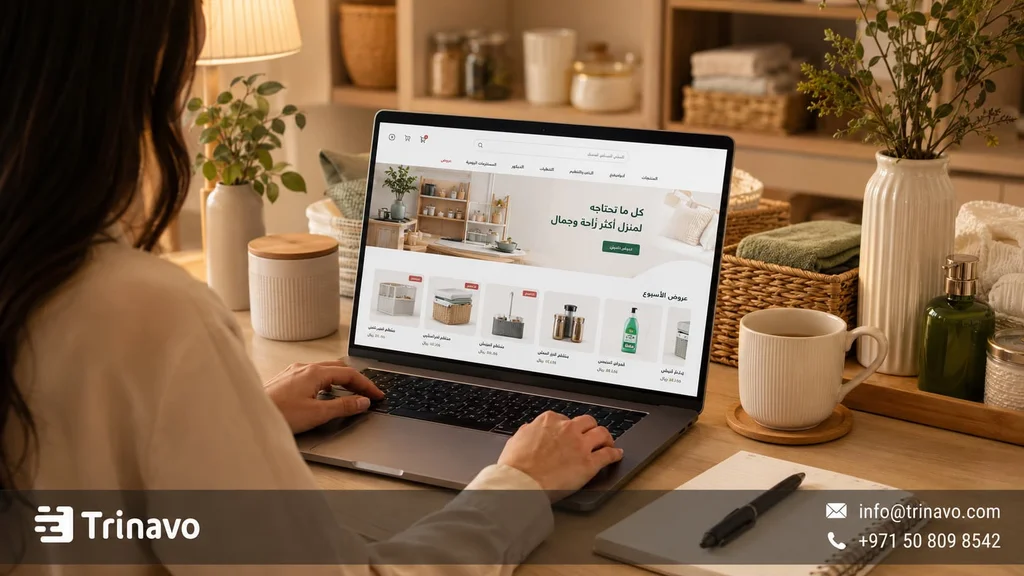
Learn more about the online store analytics dashboard
Mistakes That Weaken a Home Goods Store
In a home goods store, the mistake may not be in the product itself, but in the way it is presented or the lack of the information the customer needs before buying. A beautiful image without dimensions, a generic description without the material, or unclear shipping can make the customer hesitate despite liking the product.
|
The Mistake |
How Does It Affect Sales? |
How to Handle It? |
|
Only one photo |
Does not help the customer picture the product inside the home |
Show the product from more than one angle |
|
Not mentioning the dimensions |
The customer may buy a product that does not fit their space |
Add the length, width, and height clearly |
|
Generic description |
Does not clarify the use or the material |
Write a practical description that explains where the product is used |
|
Weak categories |
Make the customer get lost inside the catalog |
Categorize by room, use, and type |
|
Missing shipping information |
Increases hesitation, especially for large products |
Clarify the cost, the duration, and the delivery areas |
|
Hiding the return policy |
Reduces the customer's trust before buying |
Explain the return and exchange terms clearly |
|
Not showing the product in context |
Makes it hard for the customer to picture it inside the home |
Use photos inside real spaces |
|
Relying on messages only |
Causes chaos in orders and specifications |
Make the store the clear reference and keep messages for support |
The clearer the product page, the easier the purchase decision becomes. The customer is not just buying a home item, but buying a look, a use, and an experience they want to imagine inside their home.
Trinavo's Features for a Home Goods Store
Managing a home goods store means dealing with a large catalog, many photos, different dimensions, changing inventory, orders that need clear shipping, and frequent questions about material and size. That is why you need a platform that helps you organize these details without complexity.
|
What a Home Goods Store Needs |
What Trinavo Provides |
|
Launching a store quickly |
Create a store without technical expertise |
|
Managing a large catalog |
Organized products and categories |
|
Displaying product details |
Customizable product pages |
|
Tracking availability |
Product and inventory management |
|
Organizing offers |
Coupons and discounts |
|
Improving visibility |
SEO tools |
|
Tracking performance |
Analytics and reports |
|
Communicating with customers |
Integrations such as WhatsApp |
|
Expanding later |
Support for languages, currencies, and growth options |
The Trinavo platform helps you build an organized store that displays your products clearly and makes it easy for the customer to buy and get in touch before ordering.
Start with a Small Catalog and Test Your Most In-Demand Products with Trinavo
You do not need to launch a huge store from the start. It is better to begin with a small, organized catalog: a decor collection, kitchen tools, storage products, or simple soft furnishings. What matters is that the photos are clear, the dimensions accurate, and the shipping policy understandable.
With Trinavo, you can start a home goods store and try out your first product collection in front of your potential customers, then monitor engagement, questions, and sales. You may discover that customers are looking for practical products more than decor, or that small products are easier at the start than large furniture, or that some products need photos in a real context.
This way, building an online home goods store becomes a scalable step. You begin with what is clear and suitable, then build your catalog based on what customers actually need.
Frequently Asked Questions About Building an Online Home Goods Store
How do I set up a return policy in a furniture and home goods store?
The return policy should be clear before the purchase, especially for large or breakable products. Clarify the return window, the required condition of the product, who bears the shipping cost, and whether the return covers assembled or custom products or not.
Can I display products with custom dimensions in an online furnishings store?
Yes, you can display products with multiple dimensions or options, as long as you clarify the sizes, how to choose the size, and any difference in price or preparation time. It is important that these details appear on the product page so the customer does not have to ask every time.
What is the best way to price decor and furniture products online?
Start by calculating the cost of the product, photography, packaging, shipping, storage, and any assembly or after-sales service. Then compare the prices of similar products, taking into account the quality of the photos, the material, and the design, because these elements may justify a higher price.
How do I attract home goods store customers through SEO?
Start by improving the product names and categories, and use words the customer searches for such as “side table,” “living room decor,” “storage shelves,” or “practical kitchen tools.” You can also create clear category pages and articles that help the customer choose the right products for their space.
Is it suitable to sell large furniture through an online store?
Yes, but it needs more details than small products. You must clarify the dimensions, the weight, the shipping method, whether there is assembly, and the return policy. Photos within a real space also help the customer picture the product and reduce hesitation before ordering.


