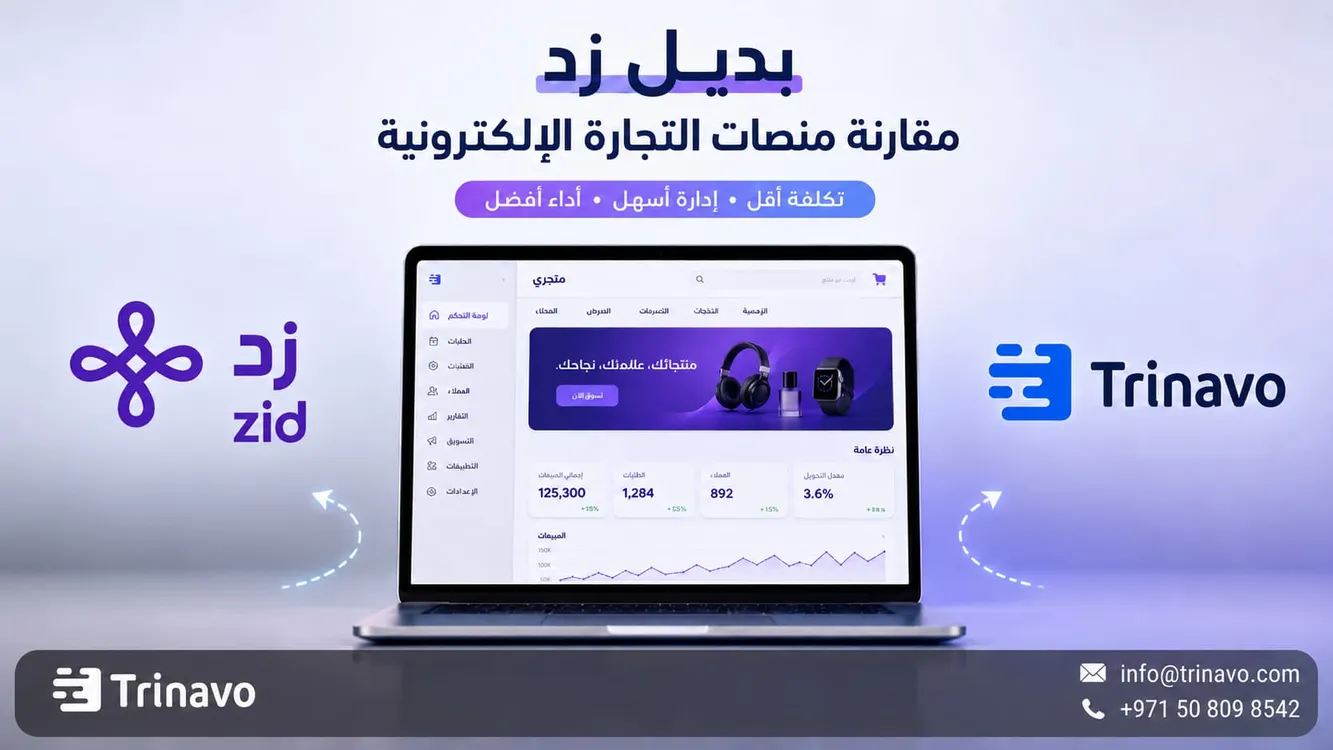
If you are looking for the most suitable platform to launch your project or take your business to the next level in the market, here is a quick comparison that reveals why Trinavo is the best Zid alternative.
As a Zid user, you know the value of the system it provides to merchants in the Saudi market, especially when it comes to how easily you can launch a store and rely on a familiar local environment. But over time, the problem of costs becoming scattered across plans and apps can surface. When you need an extra feature such as SEO optimization or abandoned-cart recovery, you may find yourself facing an external app and new fees, which makes your store's monthly cost higher than expected.
This is why some merchants start searching for a Zid alternative that gives them a simpler way to manage the store, clearer costs, and less reliance on external apps.
Trinavo steps in here to offer you a radical solution to the problem of accumulating costs. It provides tools that help you manage products, improve SEO, use artificial intelligence, and follow up on carts within the platform itself. It also lets you start on a free plan, so you can try the store, add products, and receive orders before moving to any paid plan.
Learn more about pricing at Trinavo
Zid When You Scale: When Do Apps Become a Burden on the Merchant?
The Zid platform offers a wide ecosystem for managing an online store; it is not limited to creating the store and adding products, but includes an app marketplace with more than 400 apps, alongside ready-made designs, financing solutions, and marketing services such as the "Mazeed" network. That is why it can be a suitable choice for a merchant who wants to start within the Saudi market through a familiar local system.
But as the store grows, certain details start to appear. A system that relies on adding an app for every feature may be convenient at first, but it can raise costs and make management more scattered over time.
Before committing to additional plans or apps, ask yourself:
· Do I need more than one tool to improve SEO or write product descriptions with AI?
· What is the actual cost after adding up the plan price, payment fees, and app subscriptions?
· Does this system give me enough freedom to customize the store experience to fit my brand?
The issue here is not only about Zid's efficiency, but about how well it fits your store's stage. A store that sells a limited number of products within a single market does not have the same requirements as a larger store that manages hundreds of products or targets other markets such as the UAE and Kuwait.
And as the store grows, it becomes important to rely on a system that reduces the need for scattered apps, and brings tools such as AI and SEO optimization together within the platform itself. That is why some merchants start looking for alternatives that give them clearer management, more predictable costs, and better flexibility as they grow.
Learn more about the SEO tools for online stores at Trinavo
Zid Transaction Fees
When comparing Zid vs Trinavo, Zid transaction fees are one of the important points to pay attention to, because they directly affect the merchant's net profit. According to Zid's help center, "Zid Pay" fees are not charged as a setup or monthly subscription fee, but are calculated as a percentage of each sale, depending on the payment network used and the store's plan.
These fees usually include:
· The payment network's percentage.
· Operational fees.
· Value-added tax (VAT).
The amount is then deducted from the sales value before the profit reaches the merchant.
So it is not enough to look only at the monthly plan price. If the product's profit margin is tight, any percentage deducted from each order can affect the net profit, especially in stores that rely on a large number of orders with low profit margins.
Before choosing the platform, ask yourself:
· How much will be deducted from each sale?
· How much profit will remain after payment and shipping fees?
· Does the profit margin allow for these deductions?
· Will the fees increase as the number of orders grows?
Trinavo, on the other hand, states on its pricing page that it does not charge commissions on sales. This does not mean that external payment gateways have no fees of their own; rather, it means Trinavo does not add a platform commission on top of the bank's or payment provider's fees. This gives the merchant greater clarity when calculating the profit margin and forecasting net income.
Learn more about payment gateways at Trinavo
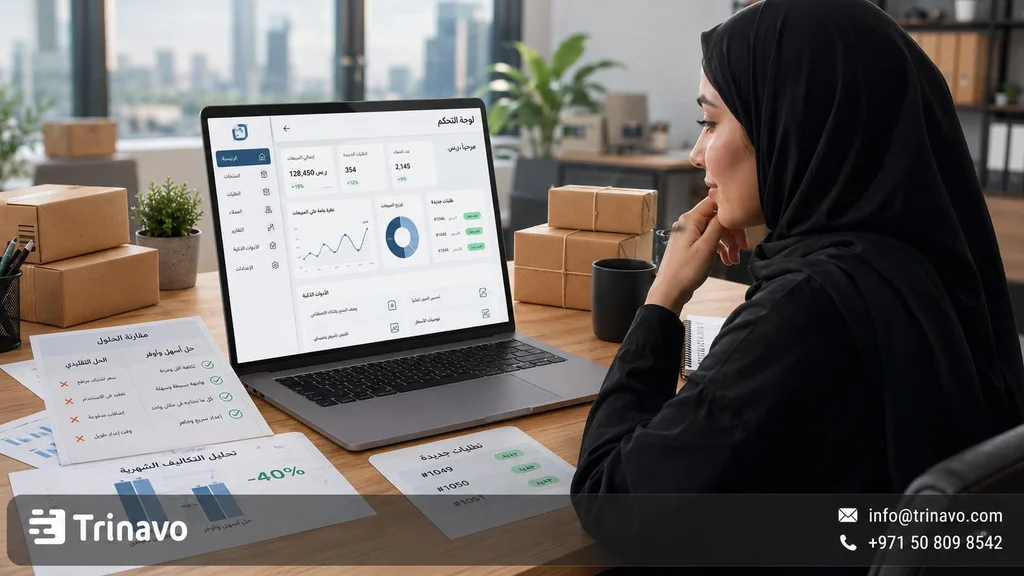
Trinavo vs Zid: Comparing Prices and Features
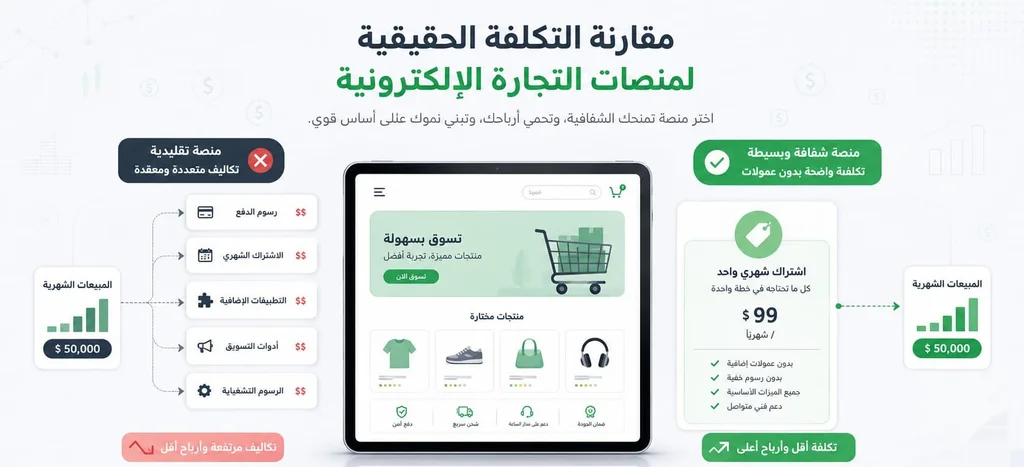
When comparing Trinavo and Zid, it is not enough to look only at the monthly subscription price. A store's real cost may include payment fees, additional apps, marketing tools, abandoned carts, and rewards programs.
Trinavo's pricing page shows a free plan at $0 per month with no credit card, including unlimited products, orders, customers, and categories. It also offers a Premium plan at $15 per month, or $160 with an annual subscription.
Zid's pricing page, on the other hand, shows the free Starter plan, then Rise at SAR 99 per month, and Growth at SAR 299 per month, with a Pro plan available by contacting sales.
So if you are looking for a no-commission Zid alternative, it is best to compare the full cost, not just the plan price.
|
Comparison criterion |
Trinavo |
Zid |
|
Monthly price |
A free plan at $0, and a Premium plan at $15 per month, with an annual option of $160 |
Starter free, Rise at SAR 99 per month, Growth at SAR 299 per month, and Pro by contacting sales |
|
Platform commission |
No commissions on sales according to Trinavo's pricing page |
Zid Pay fees are calculated as a percentage on transactions depending on the payment network and store plan |
|
Free plan |
Available without a credit card, and includes unlimited products, orders, customers, and categories |
There is a free Starter plan, but you should review the features based on the store's needs |
|
Products and orders |
Unlimited on both the free and paid plans |
Depends on the chosen plan |
|
AI tools |
AI Suite on the paid plan, with tools to improve SEO, enrich products, and restructure categories |
Does not appear on the pricing page as a clear, comparable AI bundle |
|
Cart recovery |
Cart management and recovery are among Trinavo's features, with limits that differ between free and paid |
The merchant may need to check its availability by plan or through apps |
|
Rewards program |
Available on the paid plans |
May depend on plan features or external add-ons |
|
Multilingual support |
Support for more than 50 languages among the platform's features |
Zid is available in several Arab markets, including Saudi Arabia, the UAE, Kuwait, Oman, Bahrain, and Egypt |
|
Mobile app |
Available on the Special plan for large stores |
You should check the cost of the custom app based on your needs |
|
WhatsApp and Telegram integrations |
Appear among Trinavo's messaging integrations |
May depend on the app marketplace or external solutions |
|
Payment gateways |
Trinavo offers integrations such as Paylink, Moyasar, Tabby, Tamara, Tap Payments, and others |
Zid offers Zid Pay and multiple payment networks within its ecosystem |
|
Best for whom? |
A merchant who wants a free start, with no platform commission, plus AI tools and less reliance on external tools |
A merchant who wants to rely on Zid's local ecosystem, its apps, and its ready-made services |
The comparison shows that the difference is not only about price, but about how you manage the store after launch. The more you need growth tools, carts, AI, or extra integrations, the more important it becomes to calculate the full cost before choosing a platform.
Zid's Real Cost
The monthly plan price alone is not enough to know the store's real cost. It is true that the subscription price matters, but it represents only one part of the operating cost. There are other items that may appear over time, such as payment gateway fees, shipping fees, additional apps, design, themes, and the marketing or messaging tools the store may need later.
So before assessing Zid's cost, ask yourself:
1. Does the plan include the features I actually need?
2. Will I need additional apps after subscribing?
3. What are the payment fees per transaction, and how do they affect the profit margin?
4. Will I sell in a single country, or do I need to expand into more than one Gulf or Arab market?
If you are looking for a free zid alternative that gives you a chance to try with the least risk, Trinavo's free plan helps you test the platform before upgrading. You can launch your store, add your products, and receive orders with no sales commissions, then pay only when you need extra features to scale.
Read also: Create a free Arabic online store: start selling easily
Customization and Design Between Trinavo and Zid
Store design is not only about looks; it affects ease of browsing, product clarity, and customer trust during purchase. So it is not enough to look at the number of available templates, but at how easily you can build a store that reflects your brand identity without scattered costs.
In Trinavo, you can connect a custom Domain, and remove the platform's logo so your brand appears independently. The paid plan also provides analytics tools, an AI Suite, cart management, and rewards programs within the platform itself.
As for large stores, Trinavo offers a Special plan that includes a custom store design, a smartphone app for both iOS and Android, and a dedicated server to support speed and stability.
Zid, on the other hand, relies on ready-made templates and an app marketplace, which suits a merchant who wants to set up their store quickly and benefit from ready solutions. But if your goal is to reduce reliance on external apps, Trinavo may be simpler to manage because it brings design and growth tools together in a single dashboard.
Learn more about connecting a custom domain for your online store
Trinavo's Features as a Zid Alternative
Trinavo's value shows in the tools that help the merchant manage the store after launch, not just in creating the store. As products and orders increase, the store owner needs solutions that reduce manual work, improve product presentation, help follow up on customers, and connect payment and messaging from one place.
AI tools to reduce manual work
When comparing Zid and Trinavo, the difference appears in how repetitive tasks inside the store are handled, especially in stores with a large number of products.
Trinavo offers an AI Suite on the paid plan, which includes tools such as:
· AI SEO Content Writer to generate titles and meta descriptions.
· AI Product Enrichment to complete product data.
· AI Category Restructure to organize categories.
The presence of AI does not mean your store will instantly reach the top results on Google; SEO depends on many factors. But these tools help you cut the time needed to write descriptions, improve product data, and prepare your store pages in a better way for indexing.
Abandoned Carts and Customer Rewards
After the first sale, the goal is not only to attract new customers, but to encourage existing customers to come back and buy again.
Trinavo offers tools to manage and recover abandoned carts, alongside rewards and referral programs built into its plans.
These tools help to:
· Remind customers who left their cart.
· Encourage previous customers to buy again.
· Reduce full reliance on advertising.
· Manage growth tools from within the dashboard.
· Reduce the need for separate apps for each feature.
And although cart and rewards results depend on factors such as price, offer, shipping speed, and customer experience, having these tools inside the platform makes managing them easier and clearer.
Readiness to Scale
When a store moves from selling within a single market to selling in more than one country, it is not enough for products to simply be available. The merchant needs payment methods that suit customers in each market, and communication channels that help follow up on orders and inquiries quickly.
This is where the importance of integrations within Trinavo appears; it supports connecting with multiple regional payment gateways, alongside communication channels such as WhatsApp and Telegram, which helps the merchant manage orders and communicate with customers within a clearer ecosystem.
Among the payment gateways Trinavo supports:
1. Paylink, which covers networks such as mada, Visa, Mastercard, Amex, STC Pay, Apple Pay, Tabby, and Tamara in Saudi Arabia.
2. Tap Payments, which helps stores reach several markets in the Middle East, with support for local and international payment methods.
3. Other integrations such as Moyasar, Tabby, Tamara, and others.
Zid, on the other hand, lets the merchant be present in several Arab markets such as the UAE, Kuwait, Oman, Bahrain, and Egypt, but the important thing here is to compare how payment, communication, and expansion are managed within each platform, and whether you need extra tools or can manage them from one place.
This way, expansion is not just opening the store in a new country, but an integrated operating experience that includes payment, messaging, and the right language for the customer.
How Do You Calculate Your Store's Cost for a Year?
A store's cost does not depend on the monthly subscription price alone. So it is not enough to compare Trinavo Premium at $15 per month or $160 per year with Zid plans such as Rise at SAR 99 per month or Growth at SAR 299 per month.
It is better to look at the full annual cost, including the subscription, payment fees, apps, customization, and any extra tools the store may need over time.
|
Cost item |
The question you should ask |
Its impact on the store's budget |
|
Base plan |
How much will I pay as an annual subscription? |
Represents the fixed part of the cost |
|
Payment fees |
Is a percentage deducted from every sale? |
Directly affects net profit |
|
External apps |
Will I need apps for SEO, carts, messaging, or rewards? |
May raise the monthly operating cost |
|
Design and customization |
Is a ready template enough, or do I need a custom design? |
Affects customer experience and store identity |
|
Expanding into new markets |
Do I need different languages, currencies, or payment gateways? |
Determines the cost and speed of expansion |
|
Manual time |
Will I write descriptions and organize categories manually? |
Represents a hidden cost in managing the store |
In short: if your store is just starting out, Trinavo's free experience may be a suitable step before subscribing to a paid plan. But if your store is already up and running and you sell daily, it is better to calculate payment fees, app costs, and the growth tools you will need over the year before making a decision.
When Is Trinavo the Most Suitable Alternative to Zid?
Trinavo is suitable if your goal is to reduce complexity from the start. It gives you a free plan to try, with the ability to add products and receive orders without needing a credit card, and without platform commissions on sales.
It also helps you manage growth tools from one place, such as SEO optimization, abandoned carts, AI tools, and rewards programs, instead of relying on scattered apps for each feature.
Zid, on the other hand, remains a suitable choice for stores that prefer to rely on a familiar local environment, a wide app marketplace, and ready-made services within its ecosystem.
So do not let a platform's popularity alone decide for you. Compare based on total operating cost, payment fees, ease of customization, and how well the platform fits your expansion plan.
Start by trying Trinavo for free, add your first products, test the dashboard and the ordering experience, then decide based on hands-on experience, not just a theoretical comparison.
Frequently Asked Questions About the Zid Alternative and Trinavo
Does Zid really charge transaction fees, and how does it compare to Trinavo?
Zid Pay does not charge setup or monthly fees, but its fees are a percentage on transactions depending on the payment network and store plan, along with operational fees and VAT according to the calculation method published in Zid's help center. Trinavo, on the other hand, states that it does not charge commissions on sales, but external payment gateway or bank fees remain a factor you should verify depending on the payment provider and country.
How easy is it to move from Zid to Trinavo?
The ease of migration depends on the number of products, images, categories, customer data, past orders, and the export format available from your current platform. Practically, start by cleaning up product data, unifying categories, reviewing descriptions, and preparing a well-organized file before importing. And if you have a large catalog or need to preserve historical data, it is better to contact the Trinavo team before migrating.
Does Trinavo support the same payment and shipping gateways in Saudi Arabia?
Trinavo offers multiple payment integrations for the Saudi market, including Moyasar, Paylink, Tabby, Tamara, Tap Payments, and others. However, before launching you should verify that the required payment gateway is available for your specific merchant account, because activation may depend on the country, commercial registration, payment-provider requirements, and type of activity.
Is Trinavo's free plan sustainable or temporary?
Trinavo's pricing page shows the free plan at $0 per month, with no credit card, including unlimited products, orders, customers, and categories, and it also notes that getting started is free with no setup fees. So it is suitable for testing a store idea or starting to sell with the least risk, then upgrading when you need features such as a custom domain, AI Suite, cart management, and loyalty.
How does Arabic-market support differ between Zid and Trinavo?
Zid is strong in the Saudi market and has a presence in several Arab markets, while Trinavo focuses on an Arab and Middle Eastern experience with support for multiple languages and regional payment integrations. So it is better to compare based on the countries you will sell in, the payment methods your customers need, and your expansion plan during the first year.


